Practical guides to selecting, designing and operating LED systems. Diagrams, calculations and checklists — from the first brief to acceptance and service.
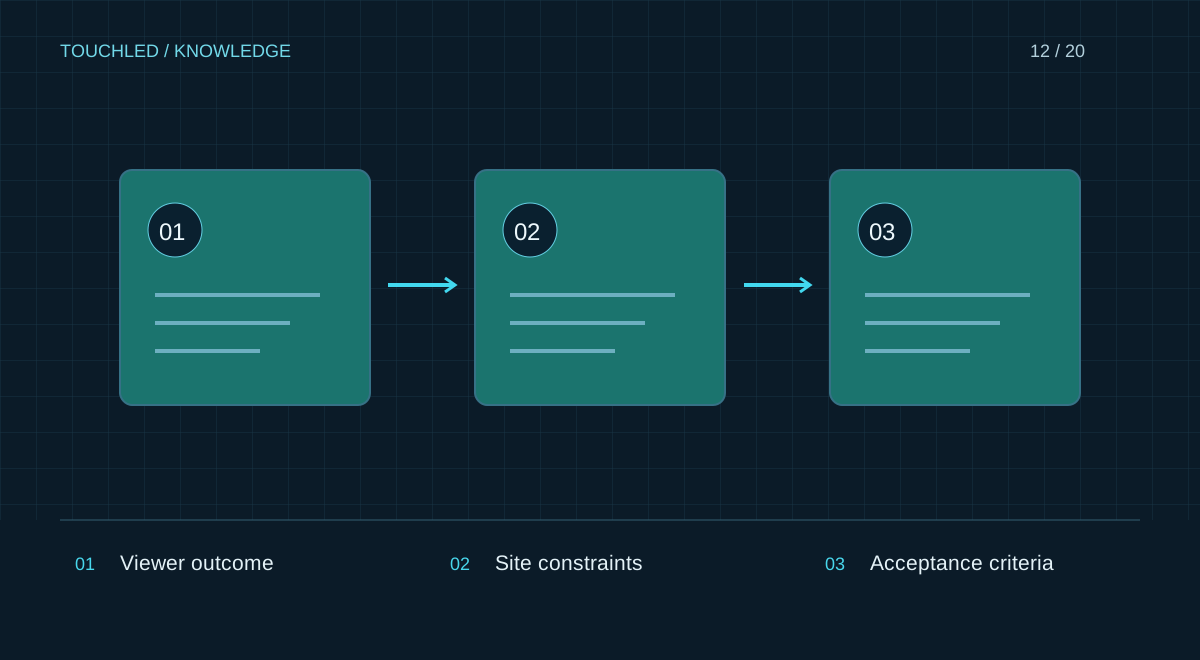
Gather inputs, define constraints and get a meaningful estimate.
Open the guideFrom the first question to on-site operation
Guides found: 20
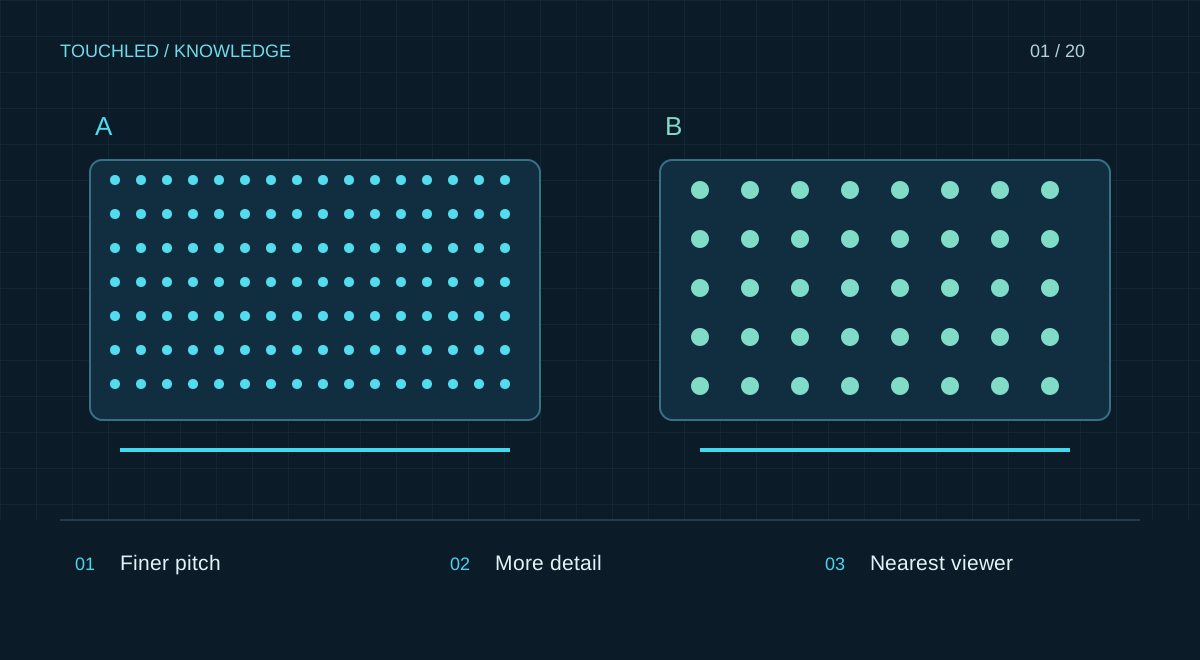
Viewing distance, content detail and site conditions are the starting points.
Read guide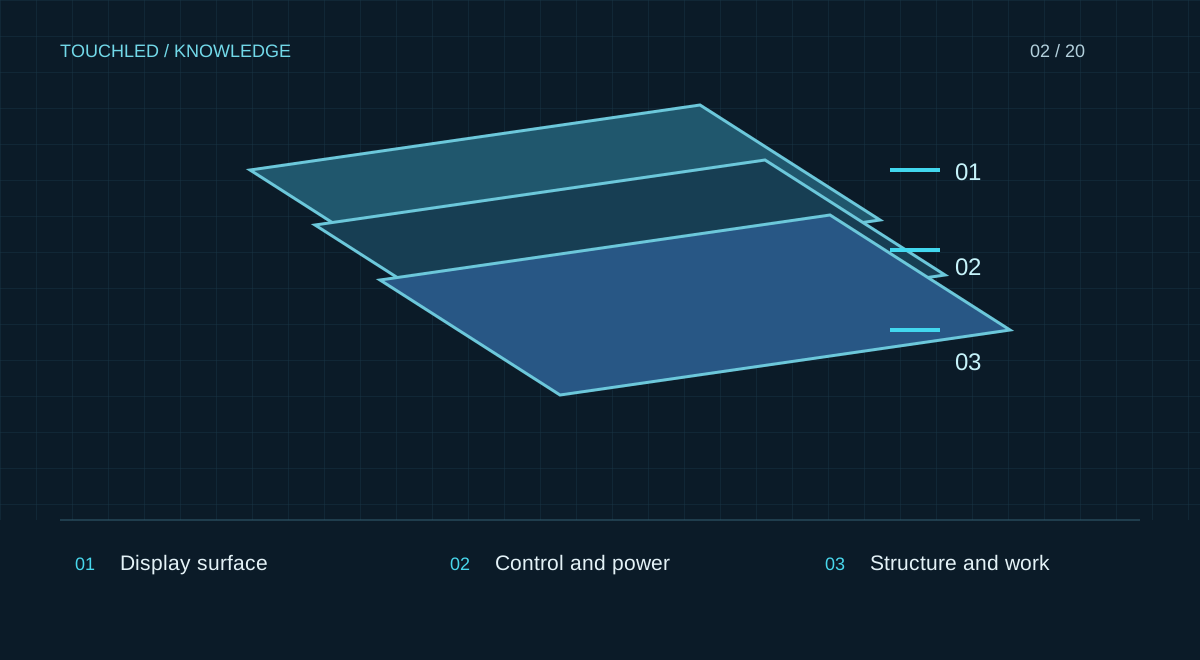
Check the complete proposal: surface, control, power, structure and work.
Read guide
Compare equivalent scope, delivery terms and ongoing operation.
Read guide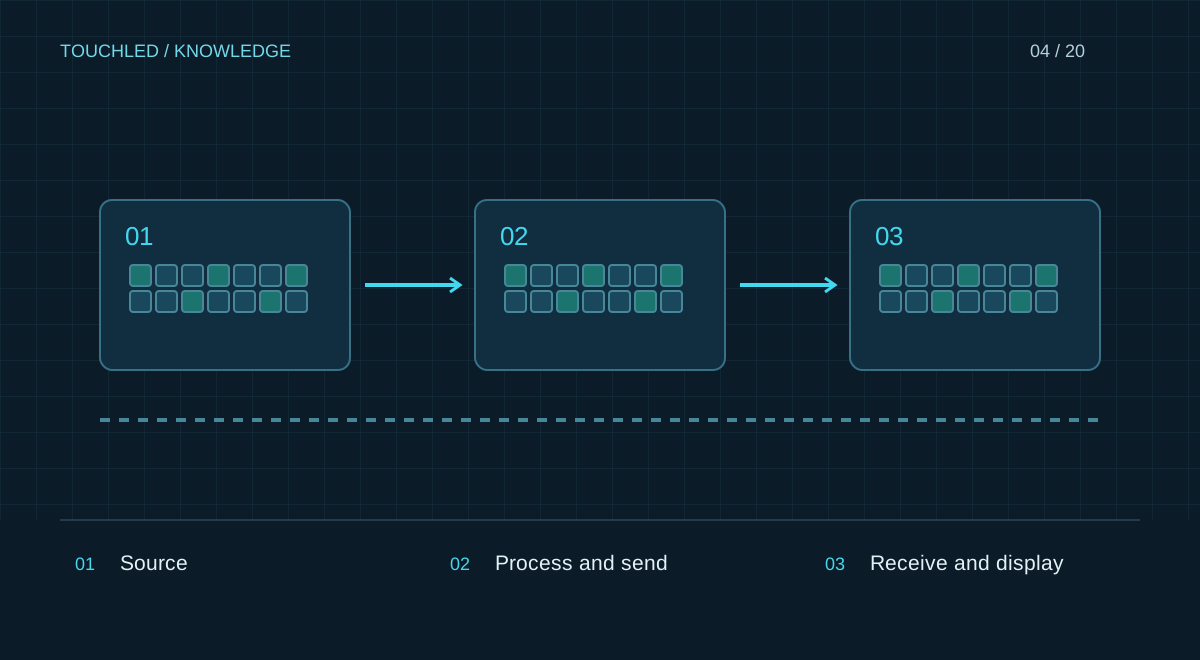
Start with the image, operating mode and complete equipment chain.
Read guide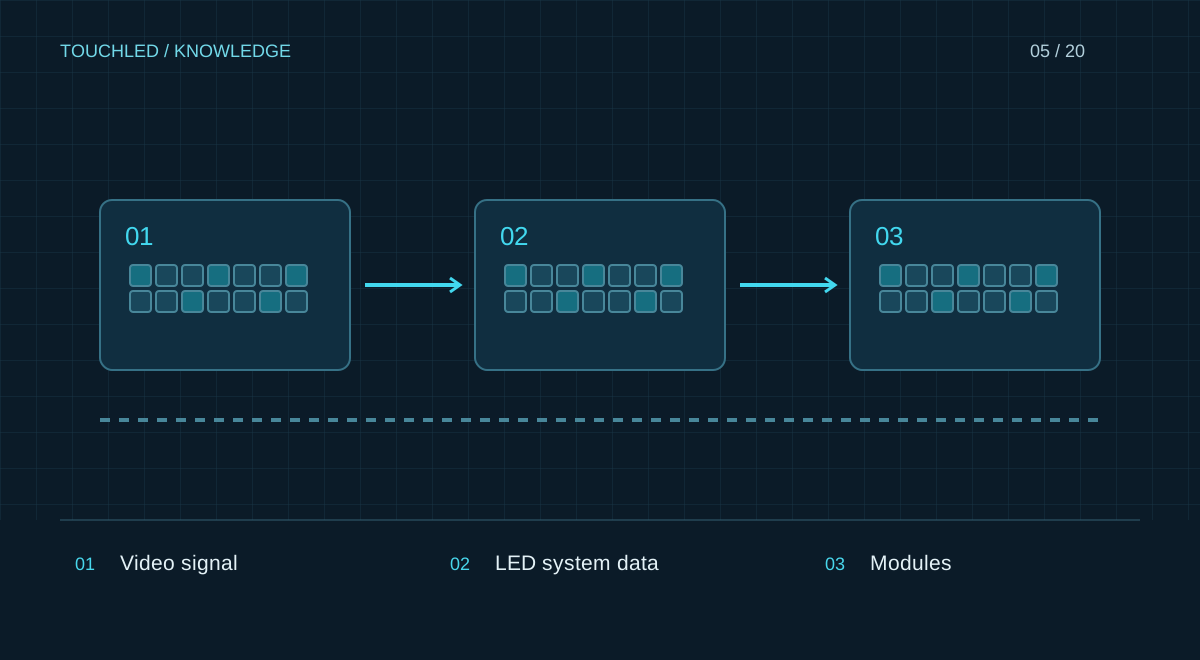
Understand devices, ports and connections without ambiguous labels.
Read guide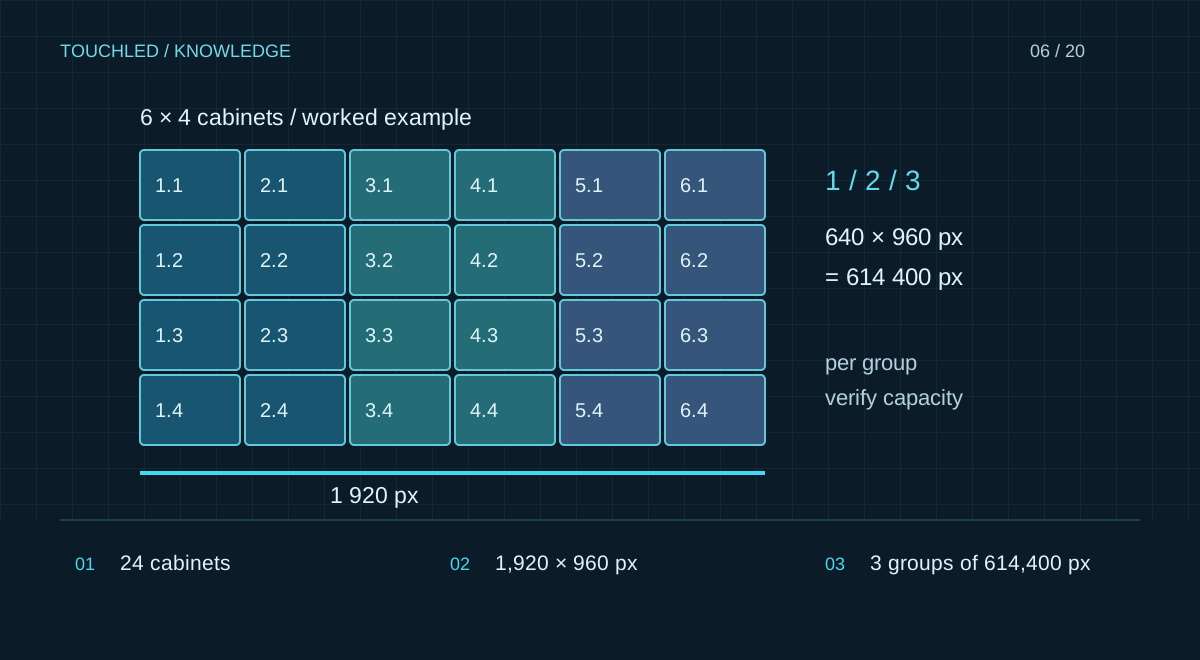
A worked example and why total capacity alone is insufficient.
Read guide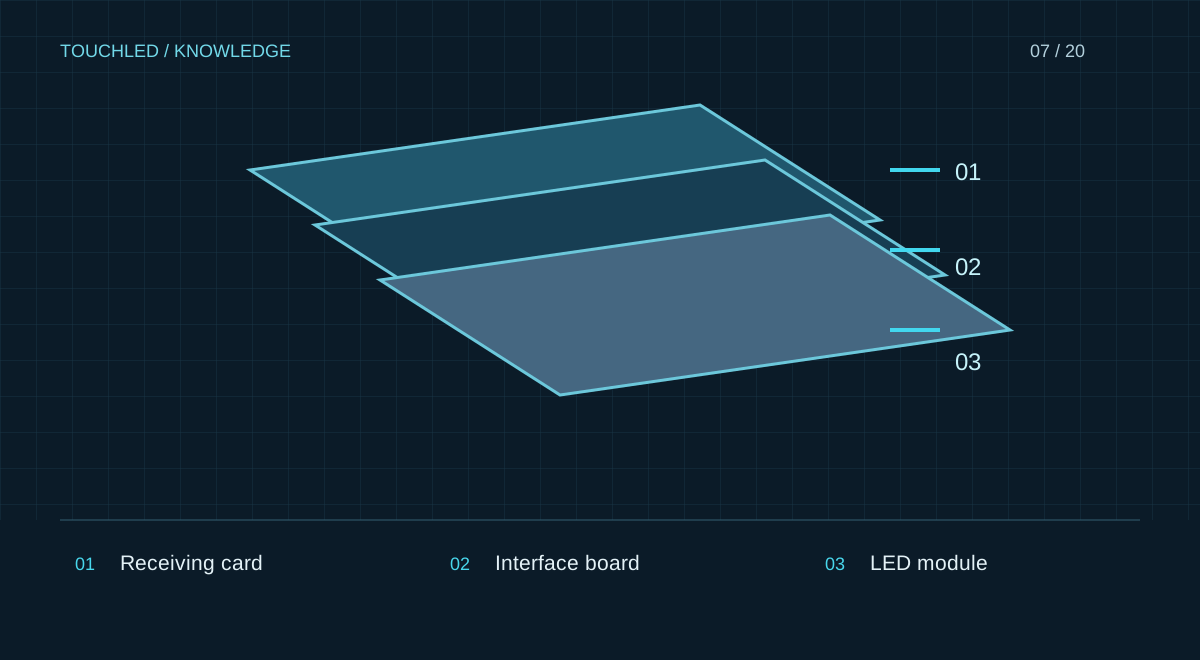
Module, interface, load and service requirements matter more than a series name.
Read guide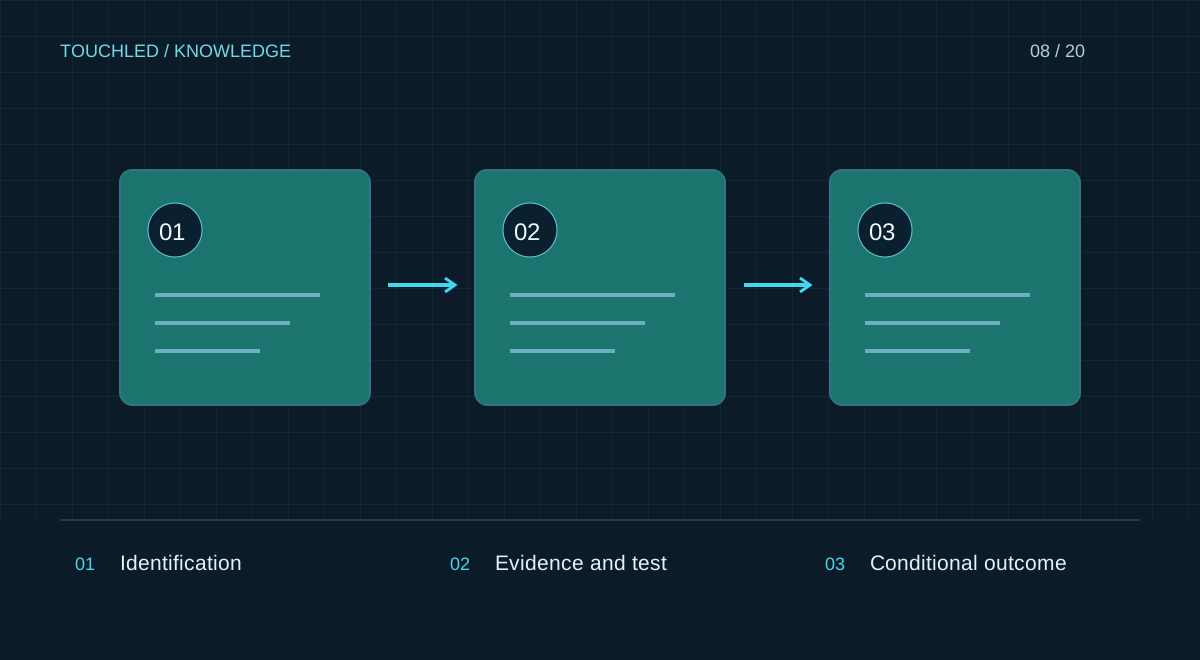
Three outcomes: compatible, incompatible or more evidence required.
Read guide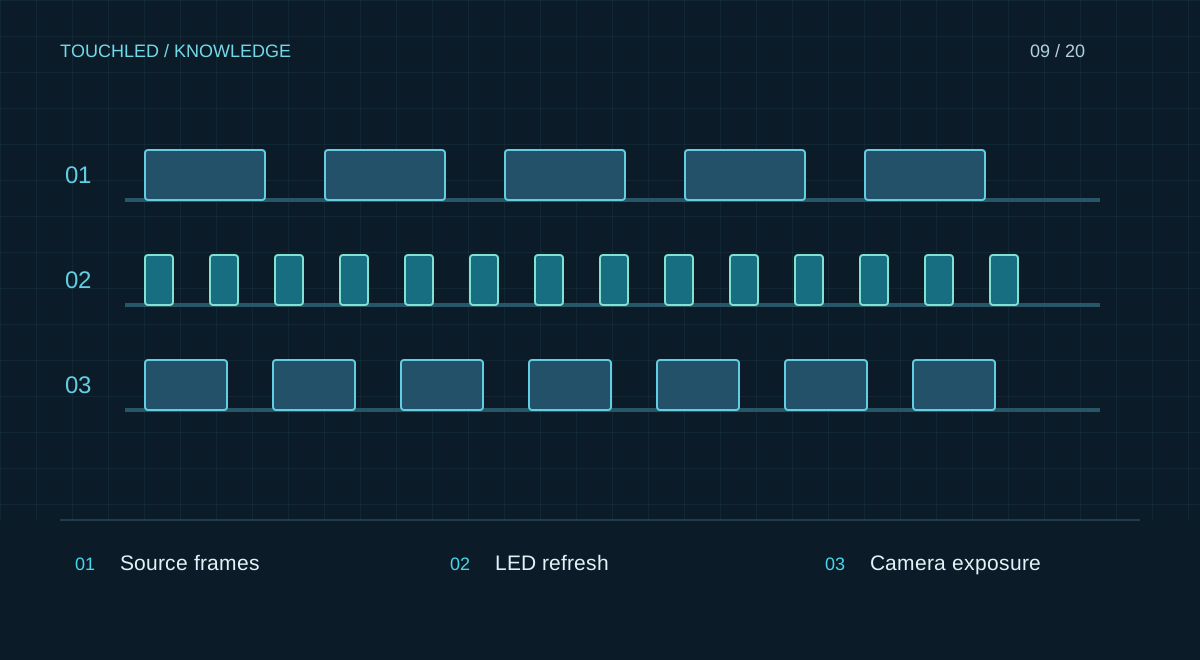
Frame rates, bit depth, inputs, pixel capacity and redundancy.
Read guide
Distinguish the model specification from a particular unit’s condition.
Read guide
Dates, venue, content and services needed for a useful quotation.
Read guideGather the right inputs, identify unknowns and obtain comparable proposals.
Read guide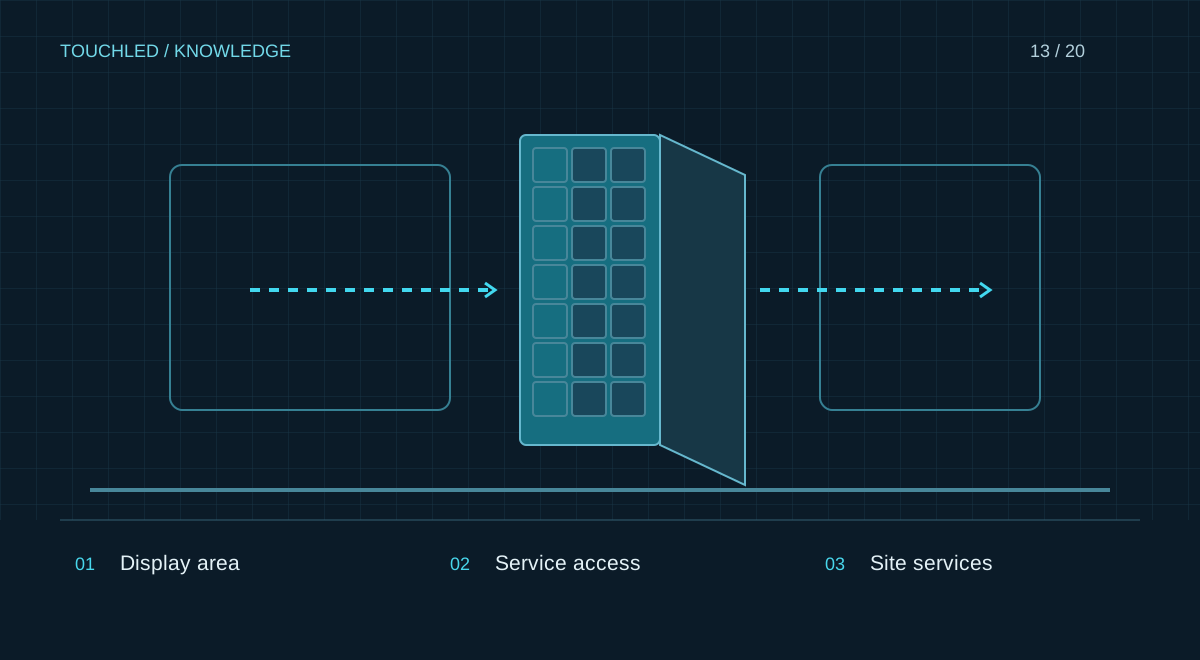
Dimensions, lighting, structure, delivery routes and connection points to check on site.
Read guide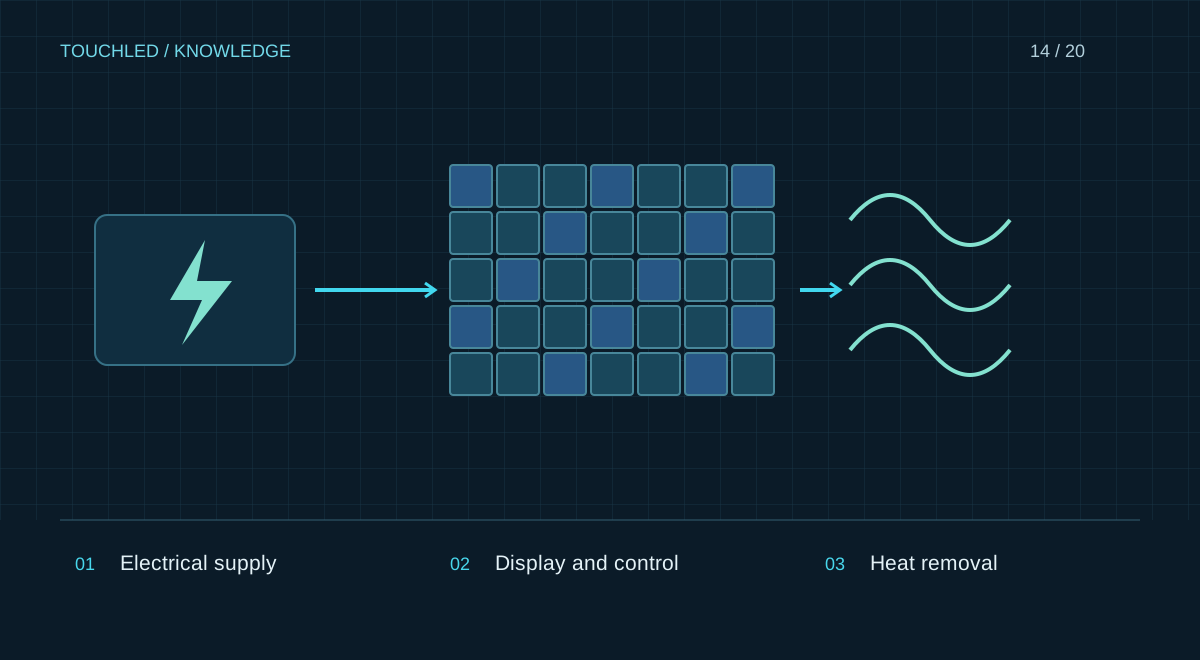
Maximum versus average power, thermal load and electrical design responsibilities.
Read guide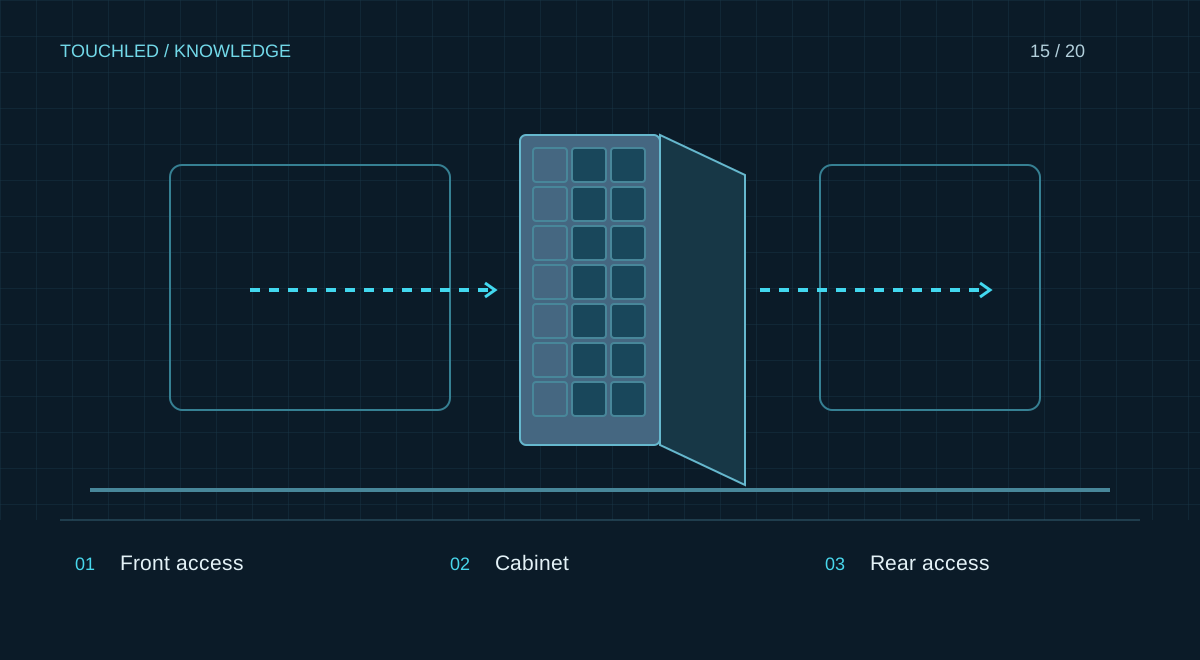
Verify access to modules, supplies, cards and fixings before fabricating the structure.
Read guide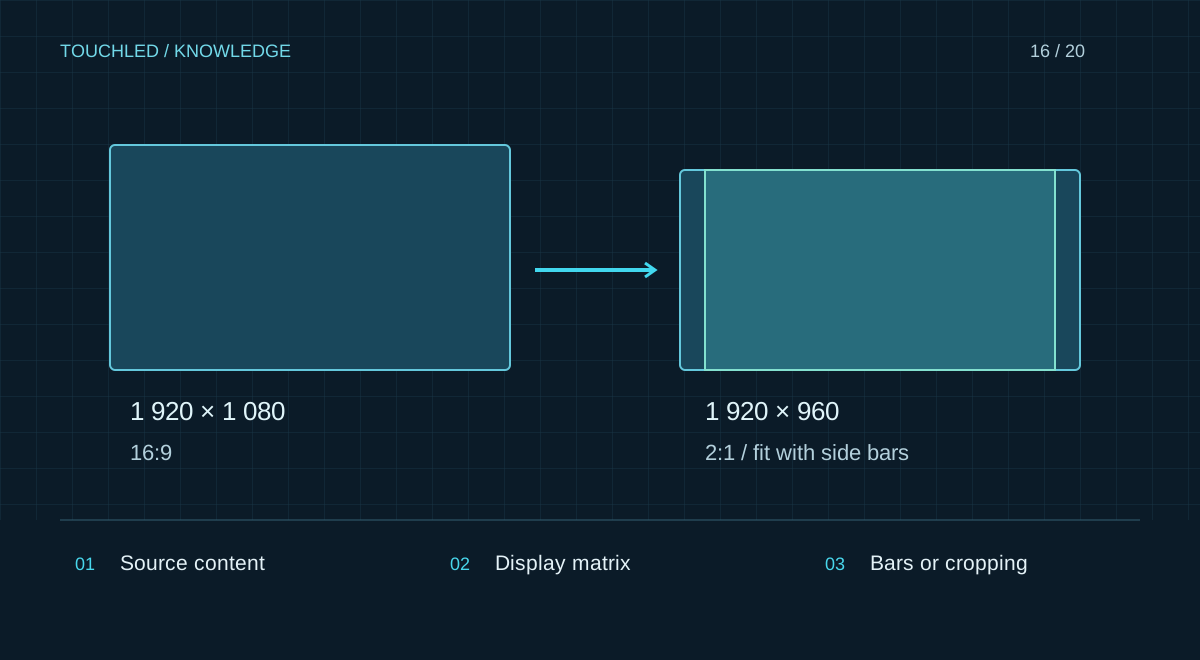
Pixel maps, scaling, safe areas and pre-show file checks.
Read guide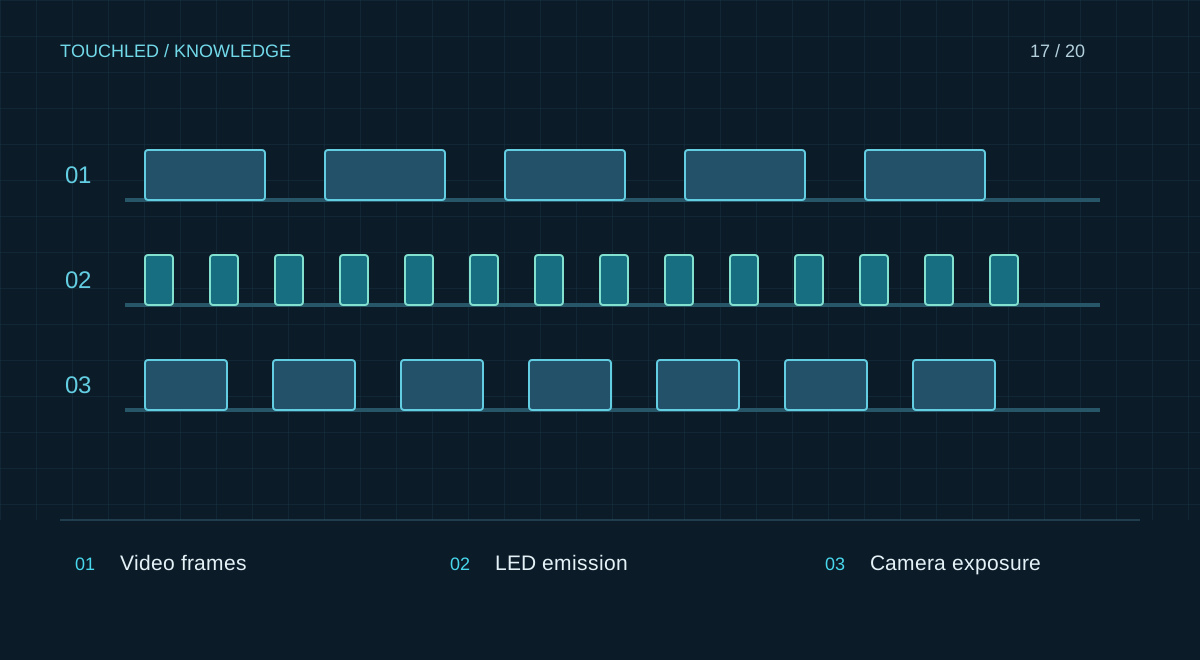
Why a refresh-rate number is insufficient and how to organize a camera test.
Read guide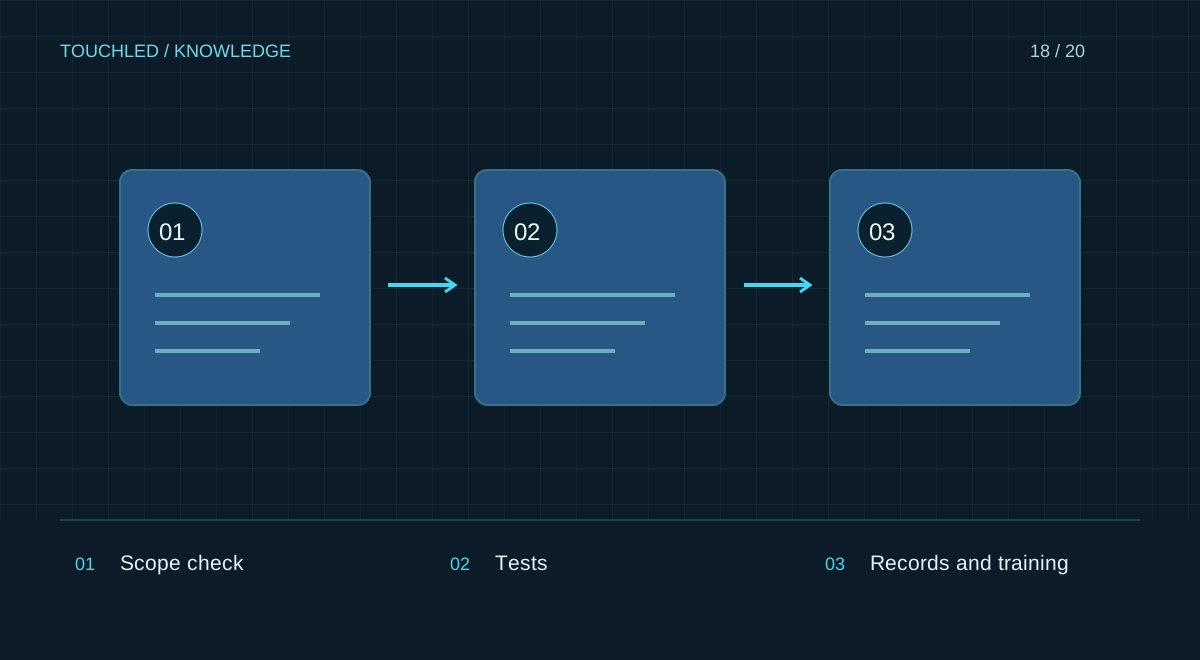
From bill-of-materials checks to configuration handover: document a working result.
Read guide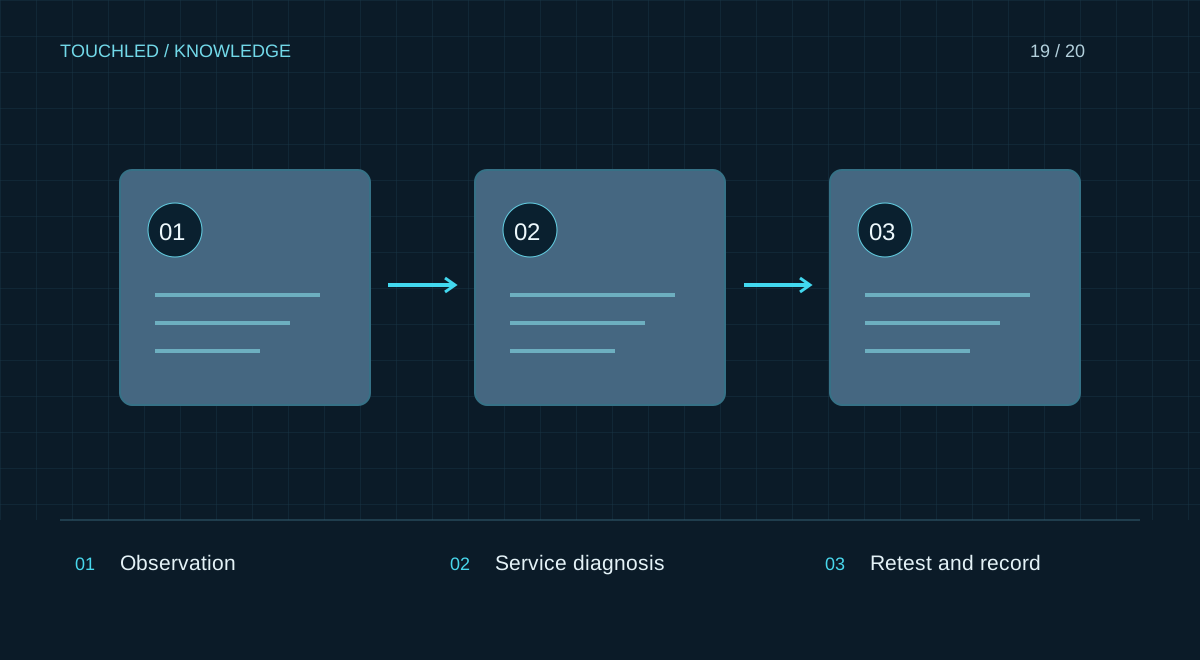
Condition records, spare parts, safe escalation and fault recovery.
Read guide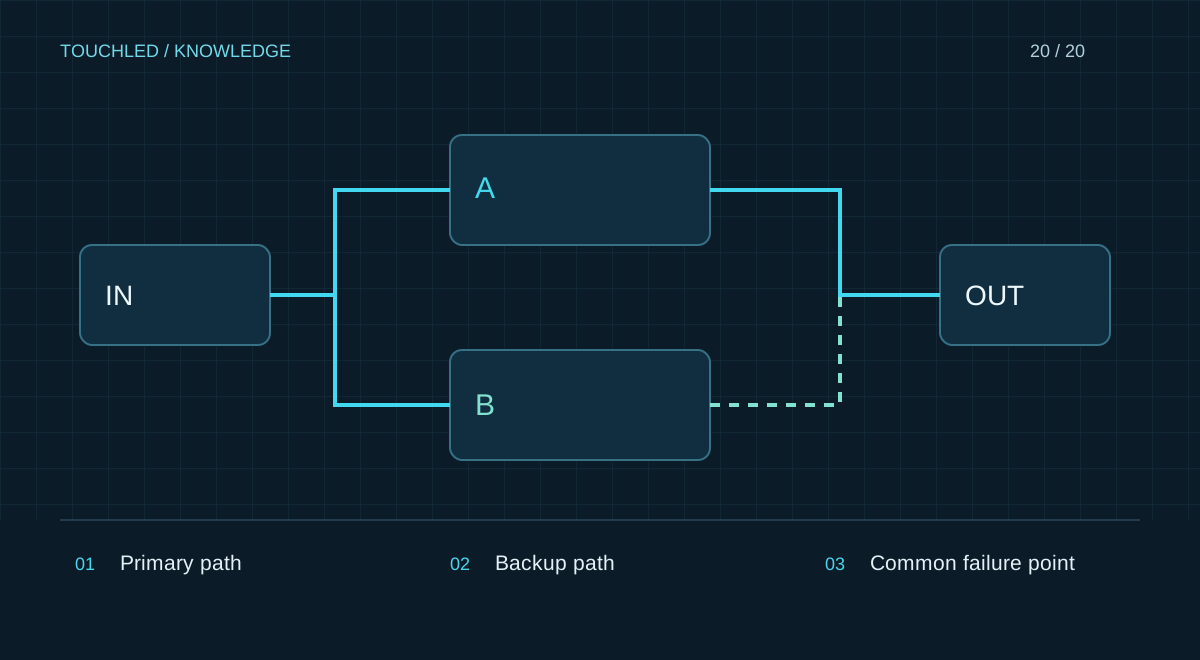
Sources, links, devices and settings: design backup for specific failure scenarios.
Read guidePrepared by the TOUCHLED editorial team. Technical guides link to primary documents and their stated revisions. Calculations are educational examples; compatibility, installation and safety require project-specific validation.

